Lesson 2.3: Data & Research
National Picture of Estrangement in HE
Currently the national picture of estrangement across further and higher education is based mostly on students self-reporting via student loans. You can see below the figures of self-reported estranged students in HE from 2019 – 25. We are assuming the actual numbers are higher than this as these are self-reported figures and some students will not be aware they are estranged or declare themselves as such.
Another interesting point of note from these statistics is that there is almost 3 times more estranged students in HE then Care Leavers.
*Please note that the 2024-25 figures are provisioned at this stage as data is still being collected.
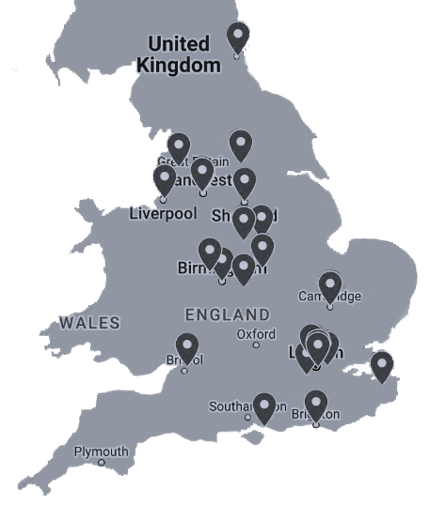
You can see a slight pattern of where the highest proportion of estranged students go to study higher education on the map. However no research has been done on why this seems to be the case, but it is interesting to note.
The introduction of a tick box for “estrangement” on the UCAS form will help to gather more information on this group, we will look at this in more detail later in the course. It’s important to note that we don’t currently have a full picture about the number of estranged students, so there really is a need for more data.
Why might students not disclose estrangement?
Stand Alone & Student Loans Company Research
In this section we are going to be looking at some of the limited but most up to date research which was collected by the Stand-Alone Charity and the Student Loans Company.
The research aims to understand estranged students’ motivations, their access to information and support, and perceived barriers in higher education. Almost 600 estranged students took part in the research, 90% of the students were from England.
Read the attached document below to help you answer the quiz questions afterwards.
Source: Focus on access and retention. Risks for students who are estranged or disowned by their family. Author: Becca Bland October 2015 (https://www.standalone.org.uk/wp-content/uploads/2016/08/Access-and-Retention.Final_.pdf)
Thank you for taking part in the quiz. As you can see, the research found that, from those who become estranged, 74% of young people become estranged before the age of 19. This figure highlights the need for training like this and why we need to raise awareness of estrangement and the support that’s available around the transition to HE for these young people.