Lesson 1: Communication Skills
Communication skills
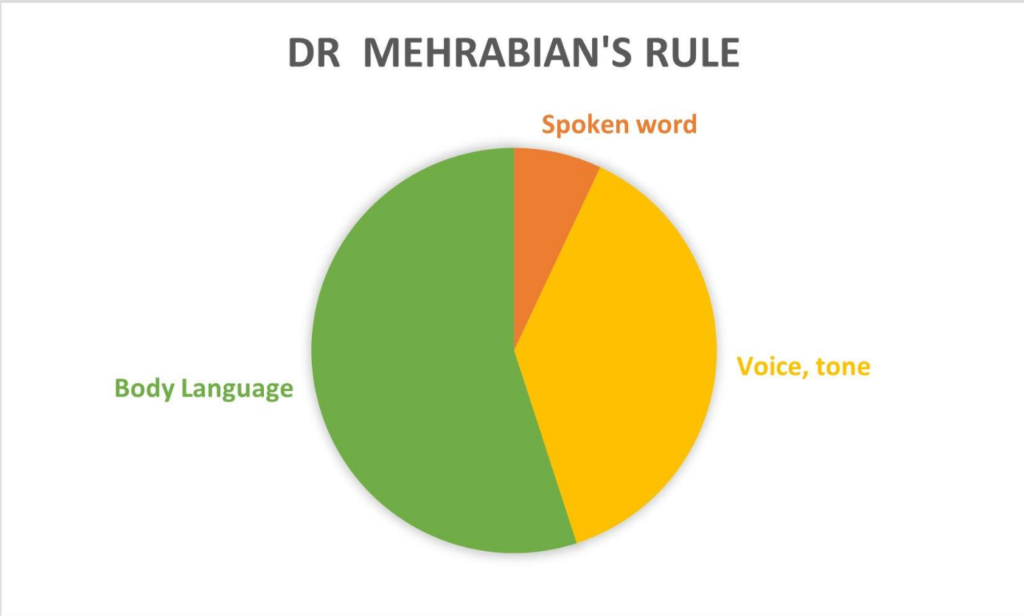
A study of face-to-face communication found that 7% of what we convey is verbal (verbal means the words used), 38% is vocal behaviour (meaning the tone of voice and other vocal qualities) and 55% is non-verbal (meaning your gestures, facial expressions and your body language).
This doesn’t mean that the words you use are not important. You should try to use appropriate words, do not swear or use slang and jargon that other people might not understand. Something else to avoid is using too many ‘filler’ words such as “um, err, like and ya’know.”
Listening skills
Communication isn’t just about talking; listening skills are really important too.
When somebody else is talking try not to interrupt, let them finish what they want to say. If you’re talking face-to-face try to maintain eye contact but don’t stare. You can demonstrate that you’re listening by nodding, making encouraging sounds or using encouraging words.
Stretch activity – Pair up with a friend, either face to face or online. Each person talks about something they love for 2-3 minutes. While one person is talking, the other must not interrupt, they should practice making eye contact and using active listening skills (as suggested above). When the person has finished talking, the listener needs to repeat back as much as they can of what the other person has said in order to show their active listening skills have worked.
Volume – The loudness of the speaker
When we are communicating effectively we need to think about the impact our volume may be having.
Somebody with a naturally loud voice can sometimes appear to be overly confident or bossy; whereas a naturally soft spoken person might be thought of as shy or timid.
So, when you are speaking to a person, perhaps an interviewer, think about whether your volume is at the right level for the situation.
If you’re speaking in front of the group, perhaps at an Assessment Centre, you may need to make your voice louder, but if you’re talking to just one person you might need to make your voice quieter.
Pace – the speed at which you talk
The speed at which you talk can also impact upon the way people understand what you’re saying. If you speak too fast people might think you’re in a hurry or you’re nervous. But if you speak too slowly, they might think you’re bored or not really interested or passionate about what you’re saying.
Watch the video below and then answer the questions that follow.
When you are in an interview, it is important to demonstrate active listening. Like Amy, you should be keeping eye contact, making encouraging sounds, nod along and sound engaged and interested. If you don’t make the effort to actively listen, you may find yourself in an awkward situation such as not hearing a question or misunderstanding what you are being asked.